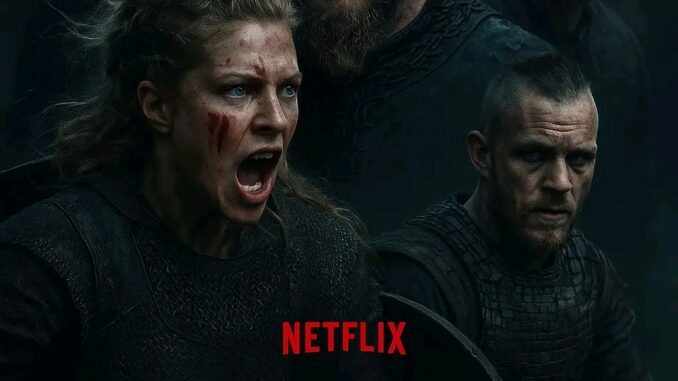
The Viking Legend Returns—But This Time the Gods Want Blood
For centuries, the legends of the Vikings have echoed through history, telling stories of fearless warriors, mighty kings, and gods whose power shaped the fate of the world. Tales of Odin’s wisdom, Thor’s thunder, Loki’s deception, and Ragnarök—the final battle destined to destroy the Nine Realms—have captivated generations. Yet according to an ancient prophecy recently uncovered in a forgotten Nordic manuscript, one Viking hero is destined to return… and this time, the gods themselves demand blood.
The mysterious legend centers around Eirik Bloodwolf, a warrior said to have disappeared during the final days of the Viking Age rather than dying in battle. Unlike other fallen warriors welcomed into Valhalla, Eirik’s fate remained unknown. Historians dismissed the tale as myth, but folklore insisted that the warrior had been chosen for a far greater purpose—one that would awaken only when the balance between gods and mortals was threatened.
According to the rediscovered saga, Eirik was granted extraordinary strength by Odin himself but paid a terrible price. He was cursed to sleep beneath the frozen mountains of Scandinavia until the ancient gods called upon him once more. His awakening would signal that peace between heaven and earth had failed, and only bloodshed could restore the order of the cosmos.
As whispers of the prophecy spread, imaginations have been ignited across the world. Fans of Norse mythology have embraced the story, blending historical fascination with epic fantasy. Social media has exploded with artwork depicting the legendary warrior emerging from icy caverns, his battle-worn axe glowing with ancient runes while ravens circle overhead as messengers of Odin.
The prophecy paints an unsettling picture. The gods are no longer portrayed as noble protectors but as desperate rulers fighting to preserve their fading power. Humanity has grown distant from the old beliefs, weakening the gods with every forgotten prayer. In their desperation, they seek a champion willing to spill blood in their name, reigniting fear and devotion across the world.
Eirik, however, is not the same warrior who vanished centuries ago. The legend claims he awakens haunted by the countless lives lost in endless battles. Once driven by glory, he now questions whether the gods deserve humanity’s loyalty. Torn between his oath to Odin and his compassion for ordinary people, he faces an impossible decision: obey the gods or stand against them.
The conflict reaches beyond the battlefield. Thor demands strength above all else, believing only overwhelming force can restore order. Freyja argues that sacrifice is necessary to protect both gods and mortals. Loki, ever the trickster, manipulates every side, hoping to ignite a conflict that benefits only himself. Each deity seeks to control Eirik, knowing his choice could determine the fate of every realm.
Meanwhile, strange events begin occurring across the Nordic lands. Ancient runestones glow beneath the moonlight. Long-abandoned Viking burial mounds crack open. Storms gather without warning over remote fjords, while mysterious figures dressed in traditional armor appear in forests before vanishing into mist. Whether supernatural or symbolic, these events reinforce the growing belief that the old legends are stirring once again.
Scholars remain skeptical, arguing that the rediscovered manuscript blends genuine Viking traditions with later medieval storytelling. Nevertheless, they acknowledge that Norse mythology has always evolved through oral tradition, making it difficult to separate historical belief from poetic imagination. That uncertainty is precisely what keeps the legend alive.
For storytellers, the return of Eirik represents more than another Viking adventure. It explores timeless questions about destiny, free will, and the cost of unquestioning loyalty. Can a hero break the chains of prophecy? Should ancient powers continue ruling a world that has moved beyond them? And what happens when even the gods fear extinction?
The emotional weight of the story lies in Eirik’s struggle. Every battle forces him to confront not only enemies but also his own past. He remembers villages destroyed in the name of conquest, brothers lost to ambition, and promises made before he understood the true cost of war. The warrior who once sought eternal glory now longs for peace, yet peace may be the one thing the gods refuse to allow.
As the legend unfolds, alliances shift in unexpected ways. Mortals who once worshipped the gods begin questioning their motives, while mythical creatures choose sides based on honor rather than divine command. Even Valhalla itself becomes divided, with legendary warriors debating whether they should continue serving Odin or forge a new future free from celestial control.
The final confrontation is said to occur beneath the branches of Yggdrasil, the World Tree connecting all realms. There, Eirik must choose between fulfilling the prophecy by sacrificing thousands in the gods’ name or breaking the ancient cycle forever. Either decision carries devastating consequences. Saving humanity may doom the gods, while saving the gods may condemn humanity to endless war.
Whether viewed as mythology, fantasy, or symbolic storytelling, “The Viking Legend Returns—But This Time the Gods Want Blood” captures the enduring fascination with Norse legends. It transforms familiar myths into a darker tale of power, sacrifice, and redemption, reminding readers that heroes are not defined by the battles they win but by the choices they make when confronted with impossible odds.


Leave a Reply